
Produtos


Copyright © 2026 União Química. Todos os direitos reservados
Aparelho Músculo Esquelético
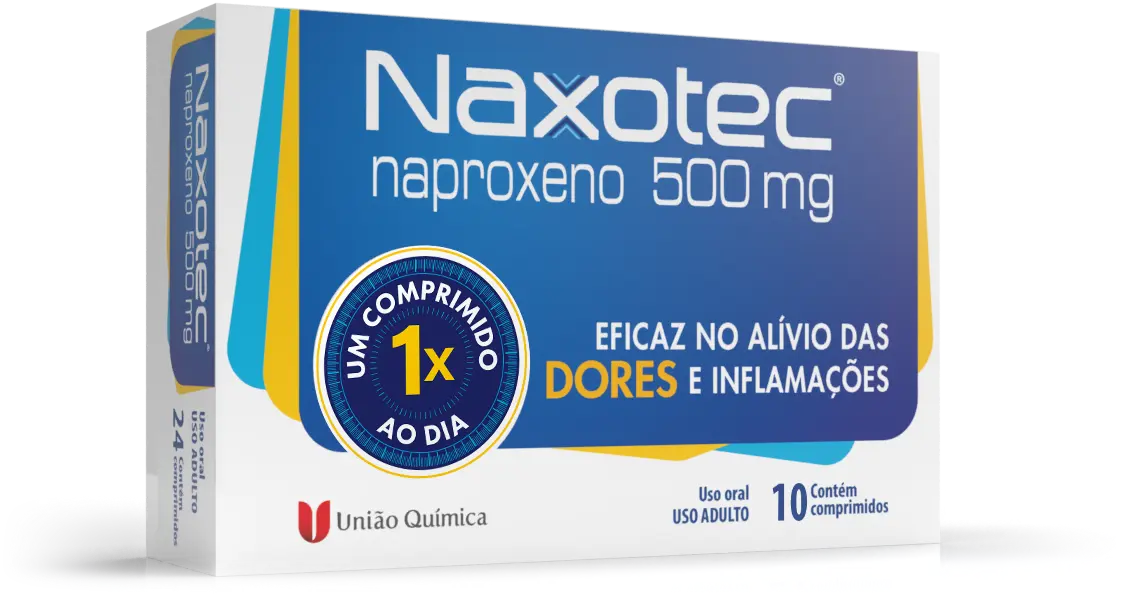
Naxotec® é um medicamento pertencente à classe dos antiinflamatórios não esteroidais (AINEs), amplamente utilizado no tratamento de condições dolorosas e inflamatórias. Sua substância ativa é o Naproxeno, um composto com propriedades analgésicas, antipiréticas e anti-inflamatórias. Naxotec® é indicado para tratar uma variedade de condições, incluindo dores associadas a artrite reumatóide, osteoartrite, espondilite anquilosante, gota aguda, condições musculoesqueléticas, dor pós-operatória, dor de dente e cólicas menstruais.
Naxotec® é um anti-inflamatório não esteroidal (AINE) com ação analgésica e antipirética. Seu mecanismo de ação envolve a inibição da produção de prostaglandinas, substâncias responsáveis pelo processo inflamatório, dor e febre. Dessa forma, o medicamento reduz a inflamação, alivia a dor e controla a febre em diversas condições, como artrite reumatoide, osteoartrite, espondilite anquilosante, gota aguda, dores musculoesqueléticas, cólicas menstruais e dores pós-operatórias.

Sendo uma empresa multinacional com capital 100% nacional, e com mais de oito décadas de atuação, a União Química construiu um histórico de conquistas, com posição de destaque dentre as dez maiores e mais sólidas empresas da indústria farmacêutica nacional.
Naproxeno
10 e 24 comprimidos de 500mg.
Naxotec® é um medicamento indicado como:
• Analgésico e anti-inflamatório – Age no alívio da dor e da inflamação decorrente da condição de base.
• Dores inflamatórias agudas, como dor de garganta e processos inflamatórios associados;
• Febre e dores em adultos, exceto mulheres em período de amamentação, incluindo dor de dente, dor abdominal e sintomas relacionados a gripes e resfriados;
• Dores musculares e articulares, como torcicolo, bursite, tendinite, lombalgia, dor na perna e cotovelo de tenista;
• Doenças reumatológicas, em períodos de crise, como artrite reumatoide, osteoartrite, espondilite anquilosante e gota;
• Cólica menstrual, proporcionando alívio da dor associada ao ciclo menstrual.
• Pós-operatório, incluindo cirurgias ortopédicas e extrações dentárias;
• Dores pós-traumáticas, como entorses, distensões, contusões e dores decorrentes de atividades esportivas.
O uso de Naxotec® é contraindicado para:
• Pacientes com histórico de alergia ao naproxeno ou a outros anti-inflamatórios não esteroides (AINEs);
• Indivíduos com úlceras gástricas, gastrite ativa, doença inflamatória intestinal ou histórico de sangramento digestivo;
• Pessoas com insuficiência renal, hepática ou cardíaca grave;
• Pacientes com tendência a sangramentos ou distúrbios de coagulação;
• Mulheres no terceiro trimestre da gravidez;
• Crianças menores de 12 anos, salvo recomendação médica específica.
O uso do medicamento deve ser feito sob orientação médica, respeitando a dosagem adequada para cada condição.
NAXOTEC deve ser administrado em jejum ou com refeições. O comprimido deve ser ingerido com um pouco de líquido, sem mastigar. A absorção pode ser retardada com alimentos.
O tratamento com este medicamento não deve se prolongar por mais de 7 dias, a menos que recomendado pelo médico, pois pode causar problemas nos rins, estômago, intestino, coração e vasos sanguíneos.
O uso de Naxotec® deve ser feito conforme orientação médica, respeitando a dose mínima eficaz pelo menor tempo necessário. O medicamento não deve ser utilizado junto com outros anti-inflamatórios não esteroides (AINEs), pois pode aumentar o risco de efeitos adversos.
Pacientes idosos, com histórico de úlceras gástricas, sangramento digestivo ou doenças inflamatórias intestinais (como doença de Crohn e colite ulcerativa) devem relatar qualquer sintoma incomum ao médico, pois há risco de complicações gastrintestinais graves, incluindo sangramento e perfuração. O tratamento deve ser interrompido em caso de sinais de hemorragia digestiva.
Indivíduos com insuficiência renal, cardíaca ou hepática devem utilizar Naxotec® com cautela, pois o medicamento pode afetar a função desses órgãos. Há também um pequeno aumento no risco de eventos cardiovasculares, como infarto do miocárdio e acidente vascular cerebral, especialmente em pacientes com fatores de risco para doenças cardiovasculares, como hipertensão, diabetes e tabagismo.
Além disso, o uso prolongado pode interferir na fertilidade feminina. Mulheres com dificuldades para engravidar devem considerar a interrupção do medicamento sob orientação médica.
Assim como outros AINEs, Naxotec® pode causar efeitos adversos, cuja intensidade e frequência variam de acordo com a resposta do organismo ao tratamento. Entre os principais efeitos colaterais relatados, estão:
• Gastrintestinais: dor abdominal, náuseas, vômitos, azia, diarreia, constipação, úlceras, sangramento digestivo e perfuração gástrica;
• Renais e urinários: insuficiência renal, retenção de líquidos e alteração nos exames de função renal;
• Cardiovasculares: aumento da pressão arterial, retenção de líquidos, inchaço e maior risco de eventos cardiovasculares, como infarto • do miocárdio e derrame cerebral;
• Neurológicos: tontura, sonolência, insônia, dor de cabeça e, em casos raros, convulsões;
• Hematológicos: anemia, redução na contagem de plaquetas e risco aumentado de sangramento;
• Dermatológicos: reações alérgicas na pele, incluindo erupções cutâneas, coceira e, em casos raros, reações graves como a Síndrome de Stevens-Johnson;
• Respiratórios: falta de ar, crises asmáticas e reações alérgicas respiratórias.
Caso qualquer efeito adverso se manifeste, o uso do medicamento deve ser interrompido e um médico deve ser consultado imediatamente.
NAXOTEC® (naproxeno) - MS 1.0497.1364. NAXOTEC® CONTÉM NAPROXENO. NÃO USE ESTE MEDICAMENTO EM CASOS DE ÚLCERA, GASTRITE, DOENÇA DOS RINS OU SE VOCÊ JÁ TEVE REAÇÃO ALÉRGICA A ANTI-INFLAMATÓRIOS. SE PERSISTIREM OS SINTOMAS, O MÉDICO DEVERÁ SER CONSULTADO.